
Common English Verb Worksheets
argue
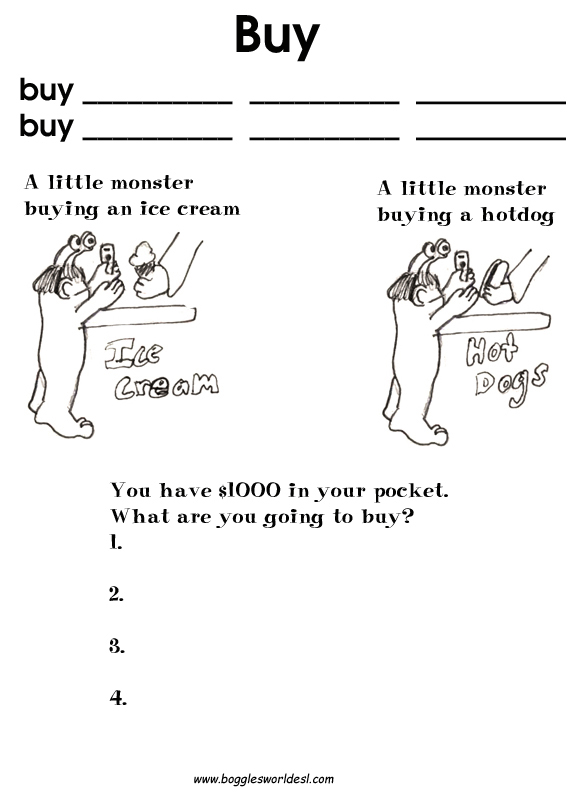
buy
fly
dream
hide
hold
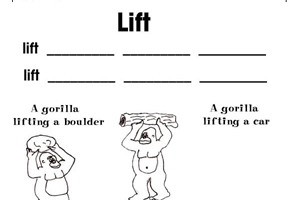
lift
like
look at
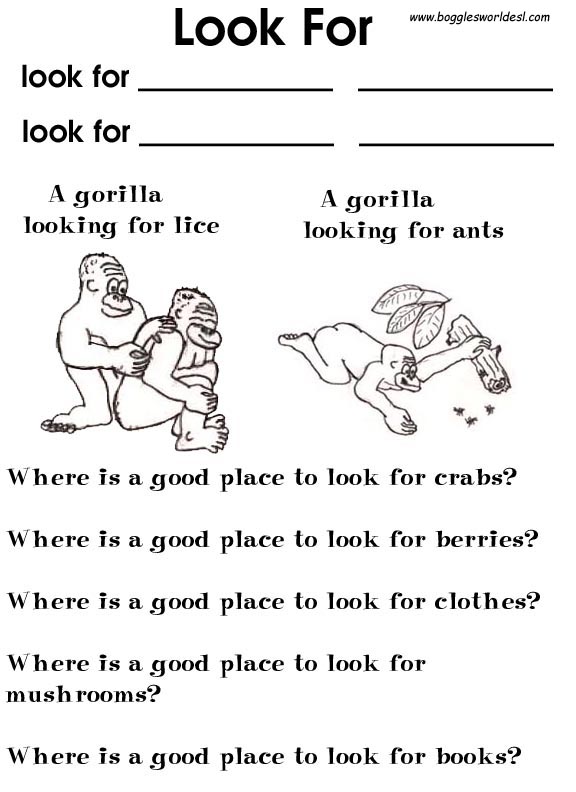
look for
make
pick
play
play with
protect
ride
run away
scratch
sell
send
smell
take
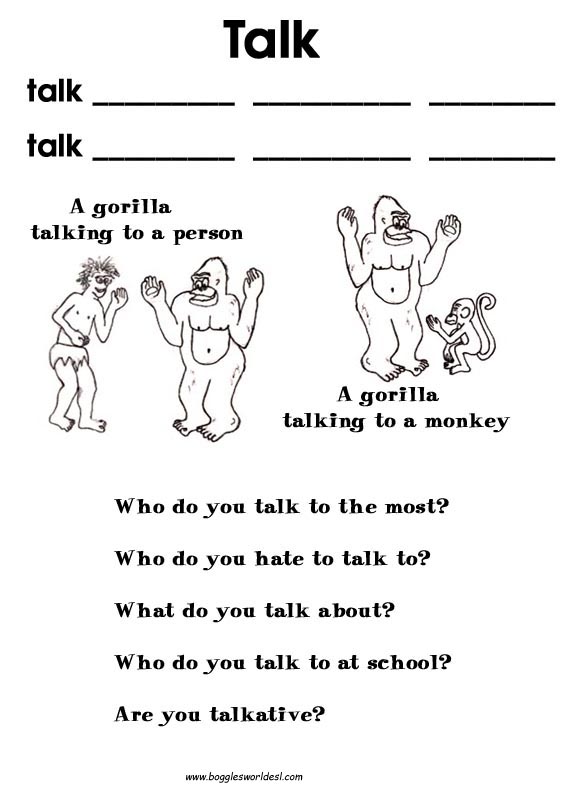
talk
think
wear
The Verbs
The verbs are supplemental sheets for other units. The purpose of these sheets is to give students a greater vocabulary base to communicate. As a teacher, I was often confronted with the same boring answers to every question I asked:
"What did you do yesterday?"
"I watched TV."
And so I developed several sets of flashcards to increase my students' vocabulary rapidly. The more they could say, the more they would say and the faster we could progress. However, being influenced by the lexical approach in ESL, I insisted on criteria for teaching vocabulary: Vocabulary must be taught in context with collocates to allow for automaticity at later stages. In the case of verbs, vocabulary should almost always be taught with commonly occurring direct and indirect objects as well as with prepositions that are found in phrasal verbs. That is, vocabulary should be taught in 'pre-assembled chunks.'
When I teach 'take', I think it's appropriate to teach the things that collocate well with take, for example 'take a bus' or 'take a shower.' Or in the case of phrasal verbs, 'look' is not to be separated from 'look at' or 'look for'.
If you want more recently developed resources for young learners check out the tons of worksheets in the Young Learners ESL Worksheets section.